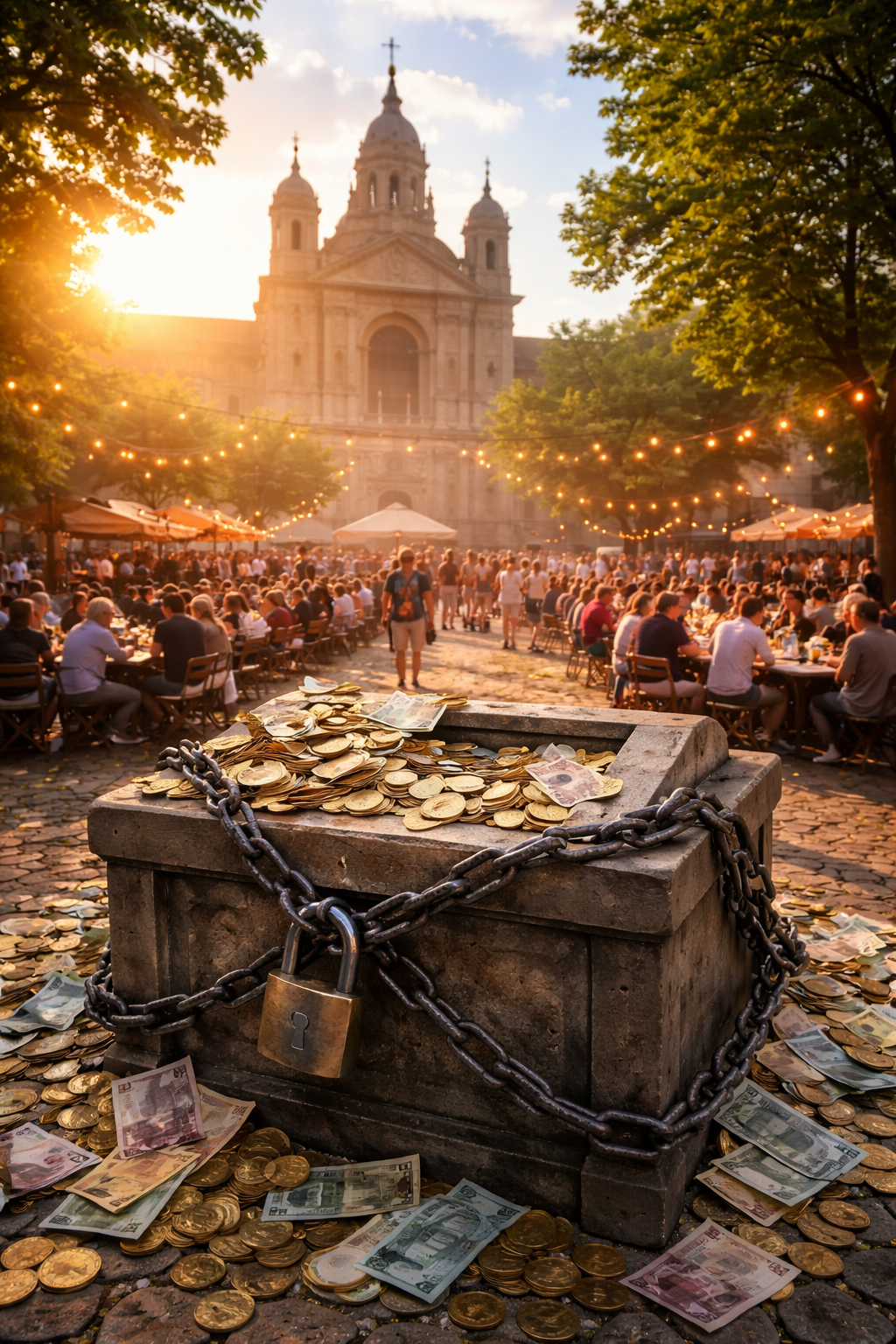
Imagine western churches redirecting wealth from maintaining buildings and hierarchies into open, non-commercial community spaces. Not for PR. Not for revenue. Just to make proximity normal again.
No glossy projects. No ROI decks. Just people together.
- Festivals that sell nothing
- Rooms open without consumption pressure
- Offers that enable encounter instead of instruction
Something our societies badly need would return: social closeness as default. Not organized by algorithms, but by physical presence. People would see, hear, and tolerate each other again.
Europe doesn’t lack innovation; it suffers social erosion—loneliness, mistrust, polarization. These grow where shared spaces disappear.
Churches already have what’s needed: money, buildings, organizing experience, legitimacy across generations. Historically they existed to foster community and meaning, to accompany life’s transitions.
The price would be loss of control—less hierarchy, less interpretive power, less institutional safety. The gain would be relevance. Real relevance for people who may not care about religion but do crave community.
The real problem isn’t missing money; it’s fear of losing significance. Paradoxically, that fear is exactly why significance is fading.
If church becomes function over institution, it might lose its old form, but regain its original purpose. Maybe it doesn’t need to happen everywhere. One town, one region could prove that social investment is infrastructure, not romanticism.